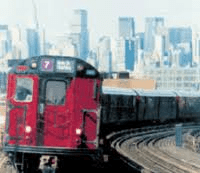
Remembering the token and riding the Redbird dates us. It was a gritty city when we arrived here in 1988. The soles of my shoes cracked from walking sidewalks strewn with crack viles and broken glass. Rusting applainces, sagging sofas, and used mattresses poked out from the ghettos vacant weedy lots. The Bonx continued to burn; we watched from an above ground subway platform as an apartment building went up in flames.
Slipping the dollar token into the slot got us through the turnstile at the Woodside Station and onto the 7 Rebird Train. We’d take it to Grand Central to transfer to a 4, 5, or 6 train and ride into the Bronx. Or maybe we’d go to Times Square for a 1, 2, 3, A, or C train to Brooklyn. Laurence spent hours poring over maps to determine the route that would take us to tract contacts who lived in highrise apartment buildings in Booklyn, Bronx, Queens, Manhattan or Staten Island. (We usually drove to Staten Island.) The subway map was our constant companion on the rails.
We returned to a cleaner and safer city in 1995 after being gone for three years. Stepping onto a 7 train car felt like coming home. The cost of a subway ride rose to $1.50 that year, and the token was being replaced by the metrocard. A young man came to the NYC Unit with some sort of early GPS device, but it had little value compared to the free subway map. The Redbirds too were being replaced, the last one running on November 3, 2003. (Many of them were dumped into the sea for the purpose of artificial reefs.)
In 2005, with street parking becoming increasingly difficult and the price of insurance rising, our little car had become a tiresome burden. We decided to sell it. How carefree we felt. The glass on the street from a car that had been broken into didn’t come from our vehicle. We’d been riding trains, but without a car, we learned just how extensive the public transportation system was, and we’d use our metrocards to ride the bus to the ocean, to Howard Beach, the Wildlife Refuge, the parks, and Brooklyn coffee shops. (We also became acquainted with the train and bus system outside of the city and have since done many day and overnight trips away from here.)
By January 2021 all 472 subway stations had tap-to-pay scanners where riders could use contactless bank cards or mobile wallets. Tap. Go. Tap. Go and so we zip through turnstiles and onto buses. OMNY (One Metro New York) cards are being phased in. The metrocard will see its demise by the end of this year. A subway ride is $2.90, but if you’re a senior like my husband you can ride for half price. What a bargain to be able to ride for less than he could in 1995! “Where do you want to go tonight?” he asks.
“Kissena Park?” I reply. We check Google Maps for directions and tap and go through the 7 train turnstile at 82nd and Roosevelt. We look at an app to see just how many minutes before the next train arrives. At the last stop at Flushing, we push through the crowds of New York’s Chinatown to wait for the Q65 bus to tap and go for a ride to the peaceful oasis of a beautiful Queens park.
Thirty years of NYC living is written across the time of the token, metro card, Omny, tap-and-go. What a city.
Berniece
ps I could write about the subway and 9/11 or how it ground to a halt during the Pandemic, about the people of the subway, and the places it carries us. So many stories. Do you have a subway story to share?
 An Ordinary Life